01 · IoT system · 2026
Yubai 余白
A quiet helper for the home: technology that recedes, so family connection can stay.
Problem
Older Chinese adults want to stay close to family, but noisy group chats and complex apps leave them either overwhelmed or locked out.
Reframe
Aging isn’t decline, it’s continuous self-cultivation. They don’t need more connection; they need curated connection with room for their own rituals.
Outcome
Three ambient objects (Loom, Veo and Pulse) that share family moments while protecting quiet, personal time.
02 Context
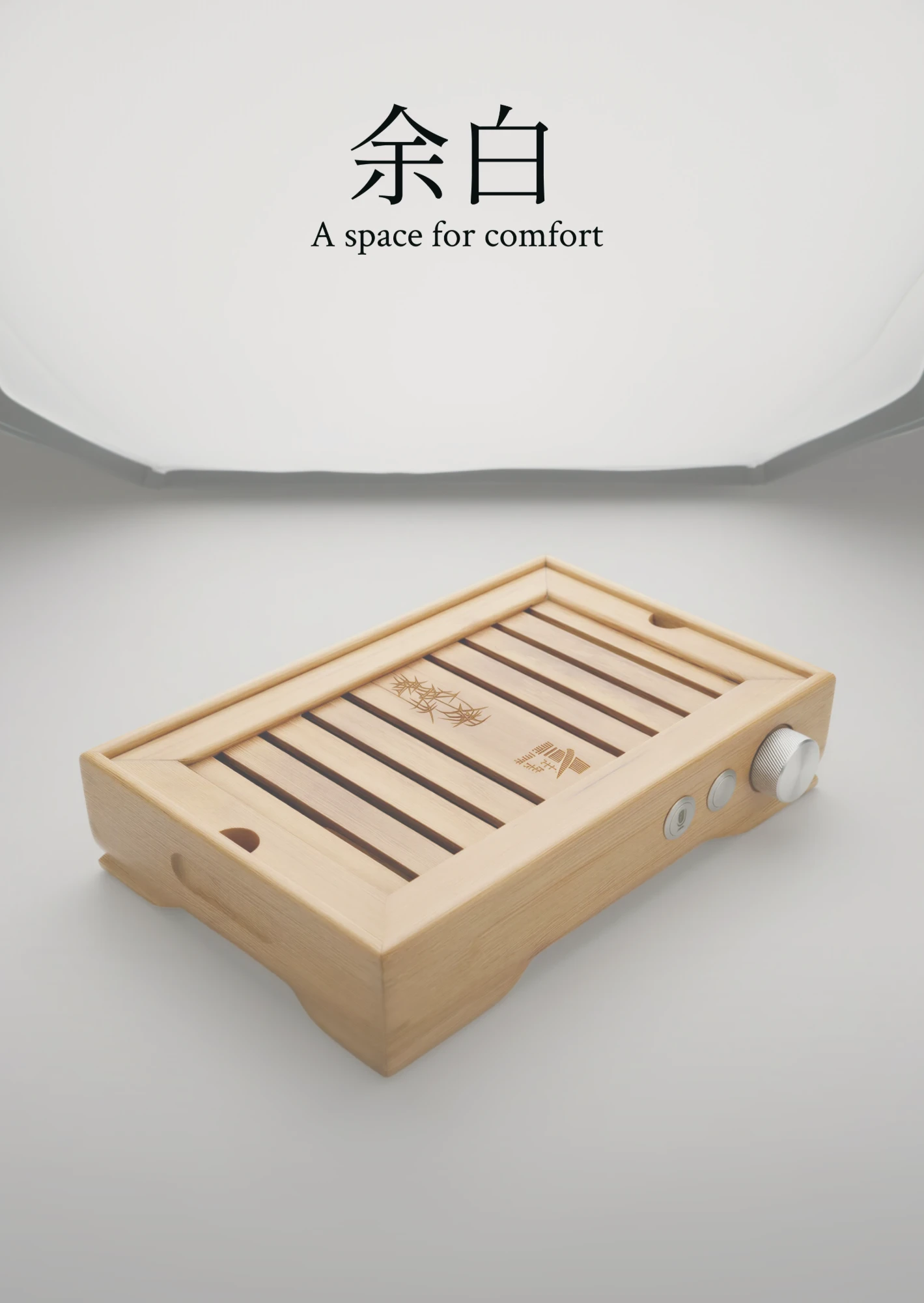
Yubai means “a place for white space.”
In Chinese art, 余白 is the empty space that lets everything else breathe. We designed a smart-home ecosystem around that idea: replacing high-friction screens with subtle, tangible, ambient technology so older adults can regain agency over their home, and keep meaningful family ties without giving up privacy or peace of mind.
03 Research
Three elders, one shared tension.
We interviewed adults aged 60–68 in China and Texas. Each wanted closeness with family, and each was being pushed away by the tools meant to provide it.
“I want to share my moments while maintaining intentional connection with family.”
What we learned
- 01
Anchored in family
They want to pursue personal joy guilt-free, knowing family connection is secure but boundaries are respected.
- 02
Aware of the drift
They feel the widening gap in tech fluency and pace, and want to engage with the world on their own terms.
- 03
Living intentionally
Reading, writing and calligraphy aren’t hobbies. They’re daily rituals worth protecting.
04 Opportunity
How might we create a low-friction home ecosystem that lets older adults stay close to family, while protecting the quiet rituals that are theirs alone?
05 Final design
Three objects, one quiet system.
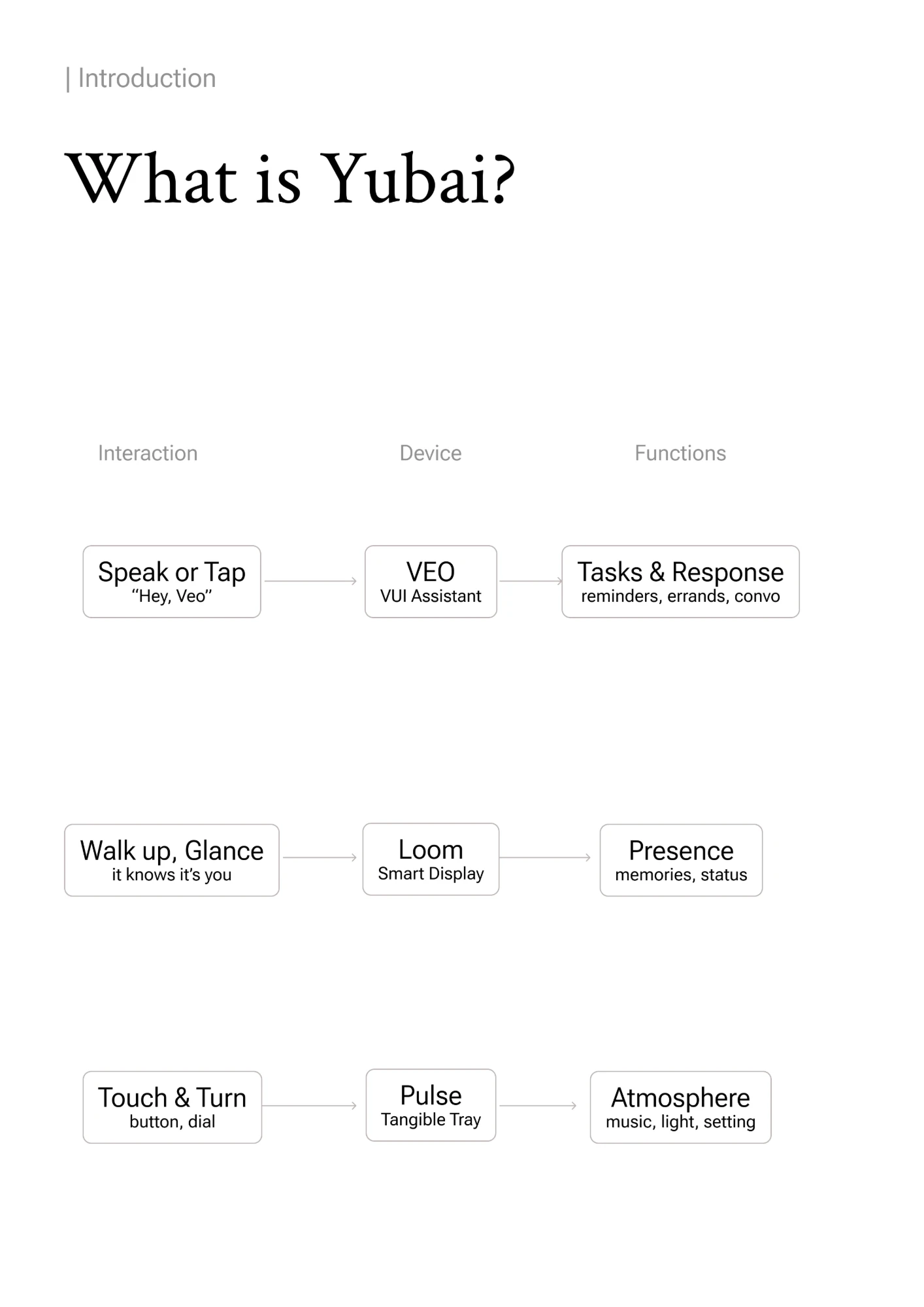
Each device does one thing well and hands off to the others, so no one ever has to learn “an app.” You speak, you glance, or you touch, and the home responds.
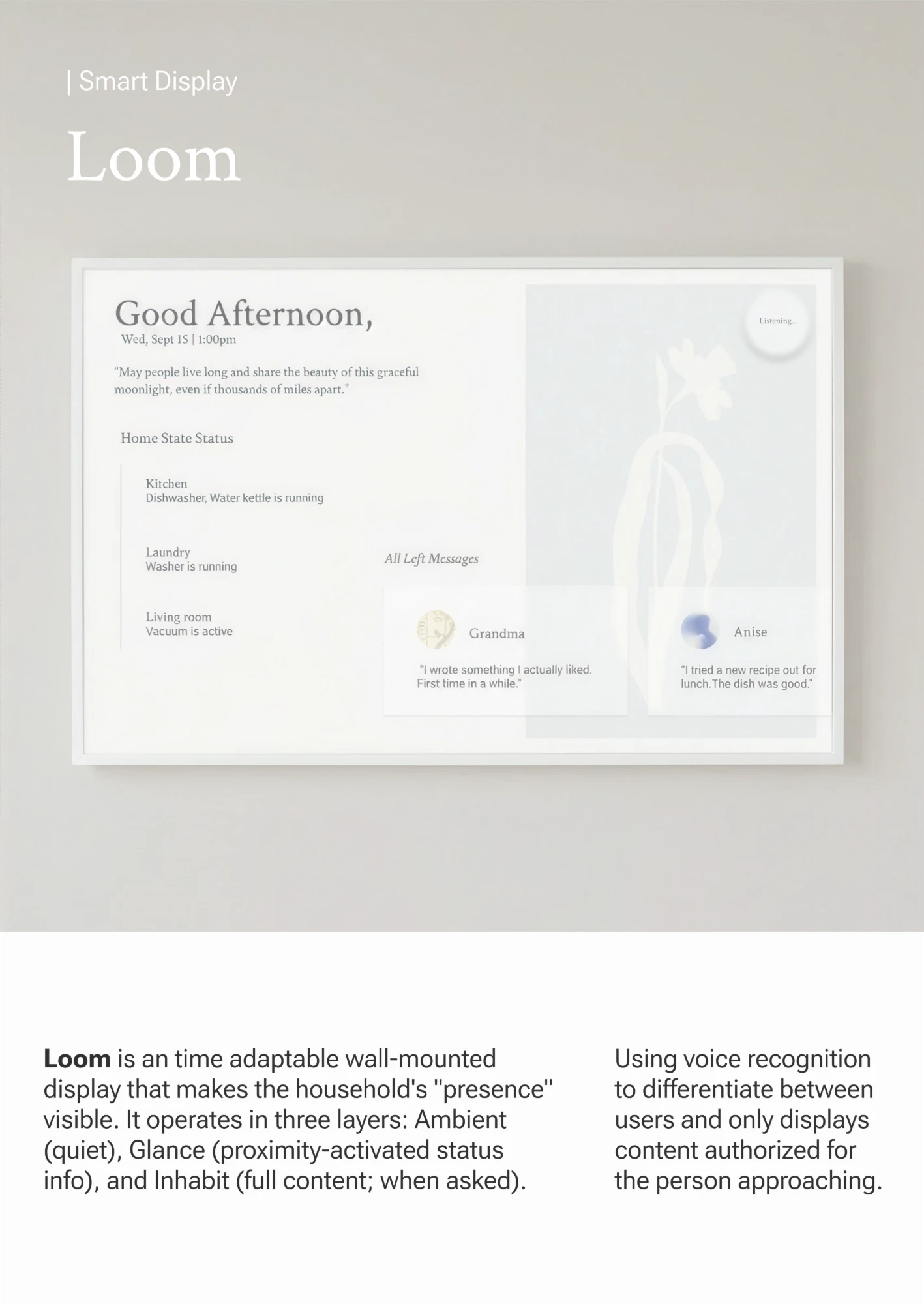
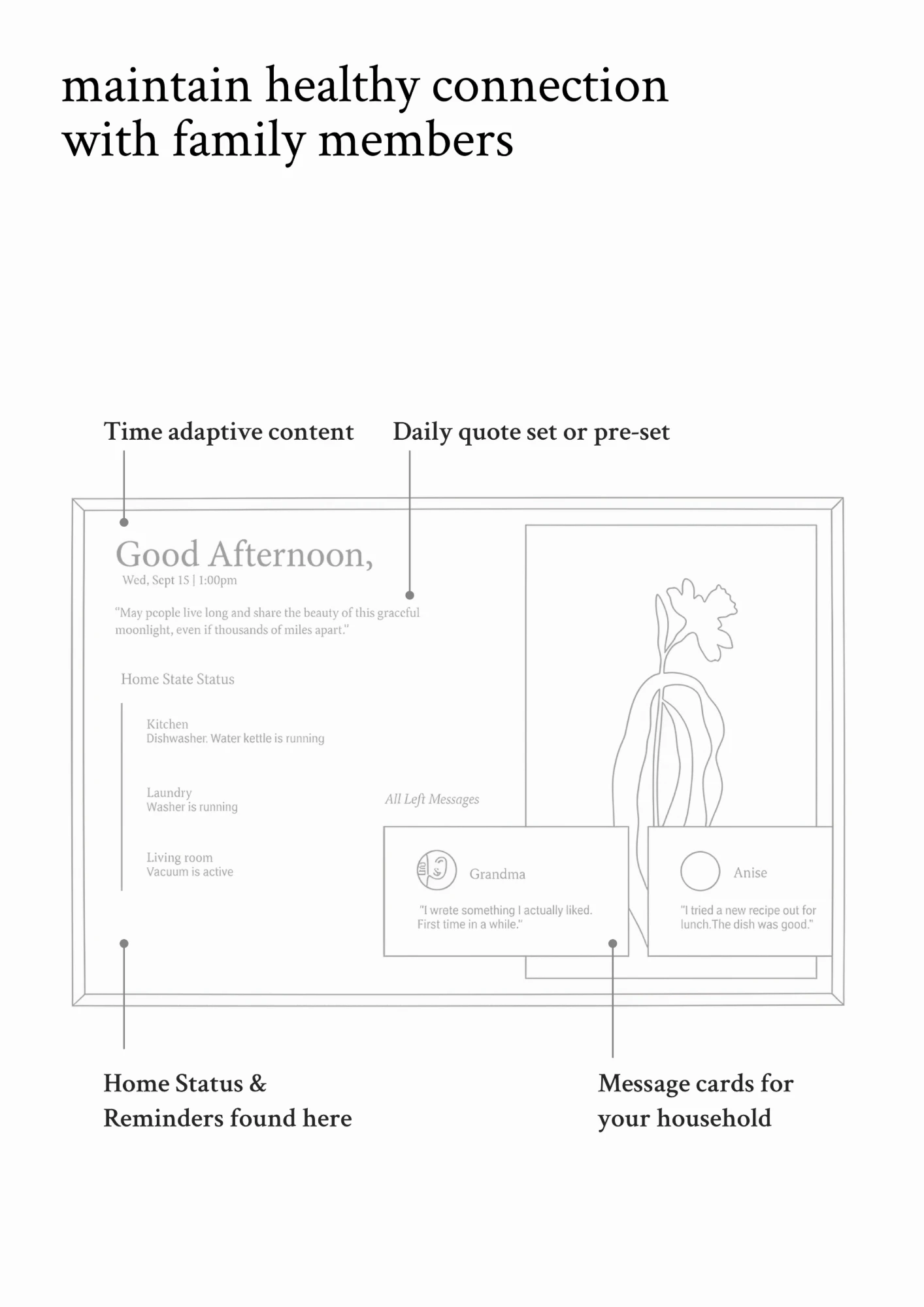
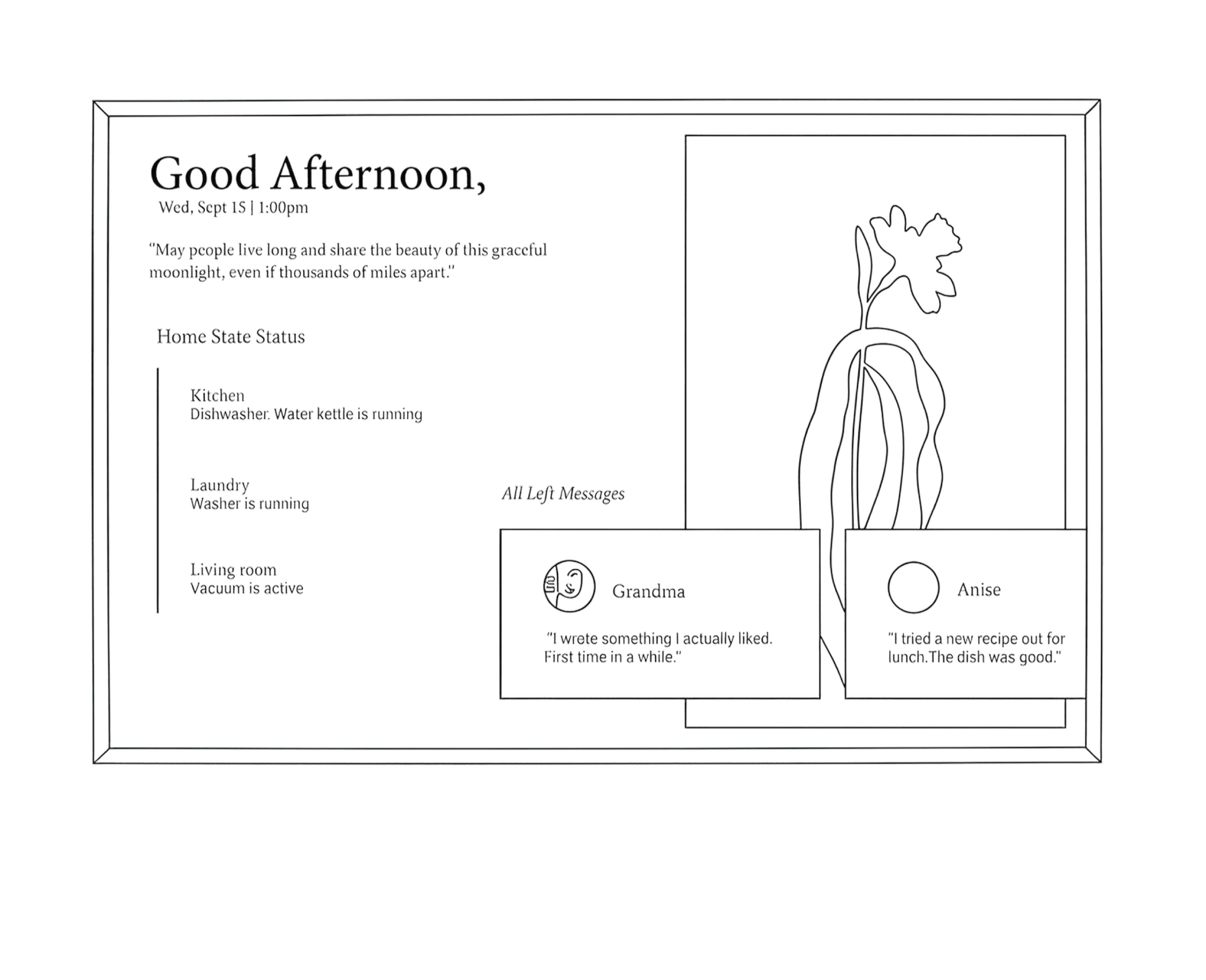
A time-adaptive wall display that makes the household’s presence visible. Voice recognition tells people apart, so Loom only shows content meant for whoever is walking up.
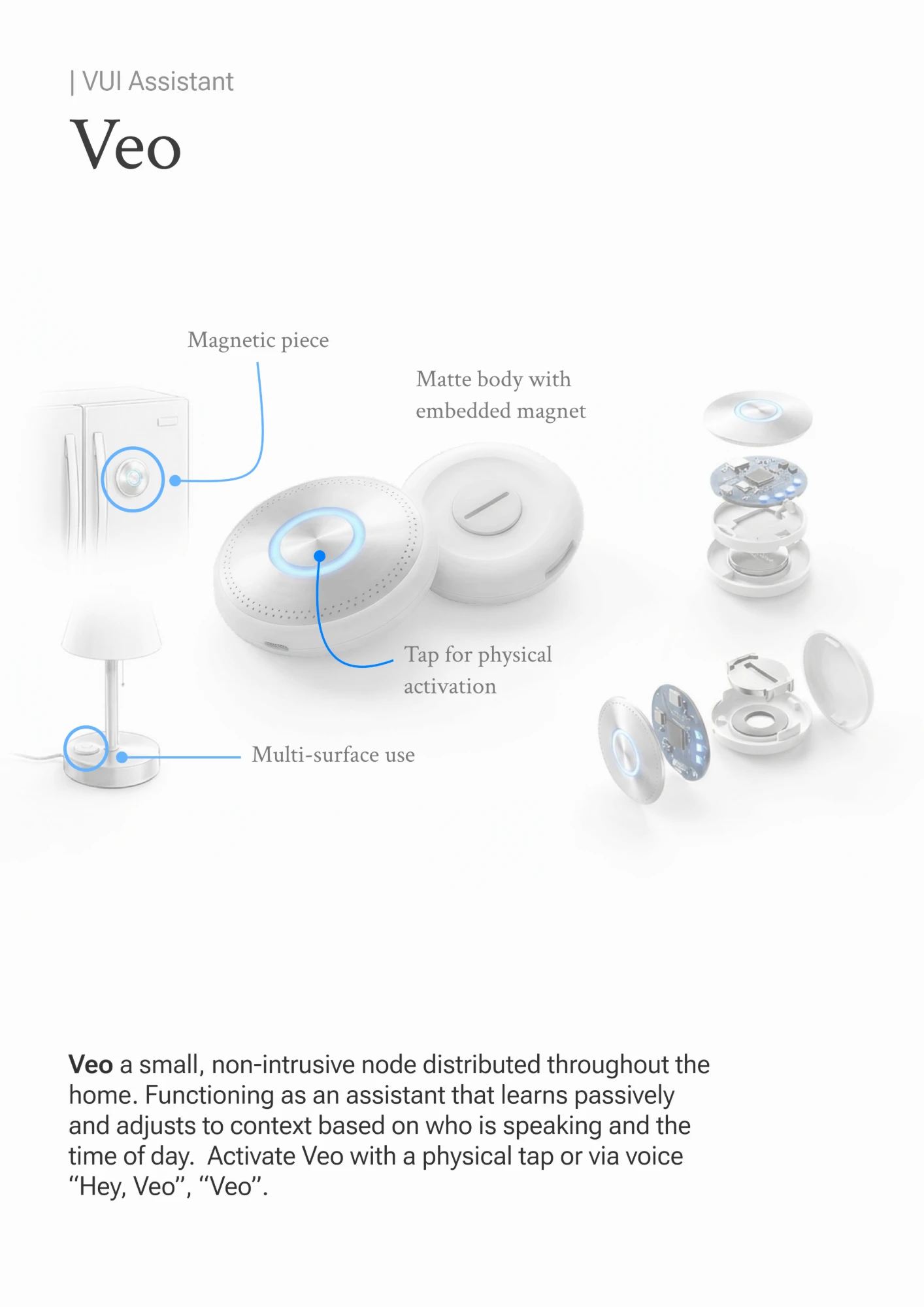
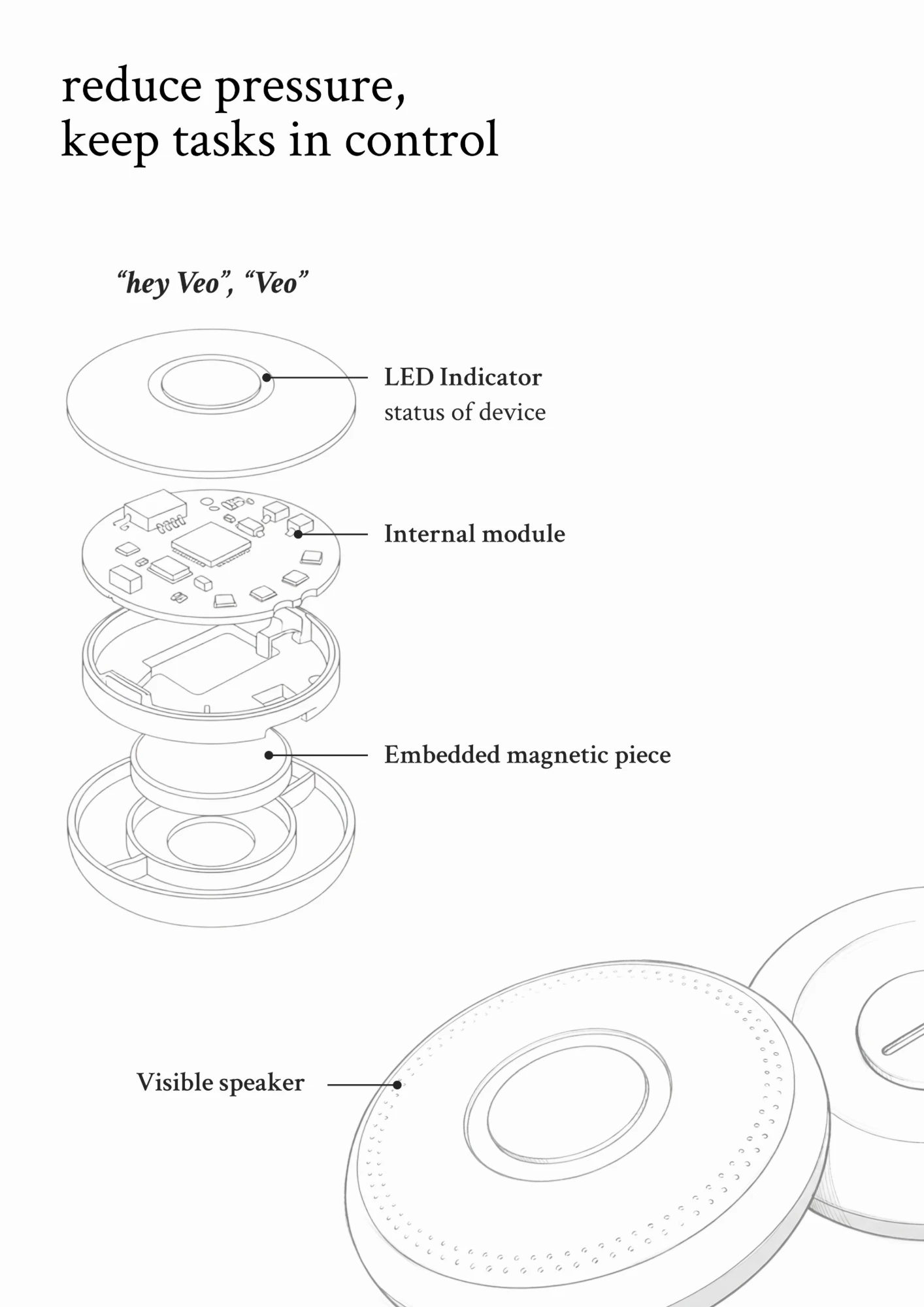
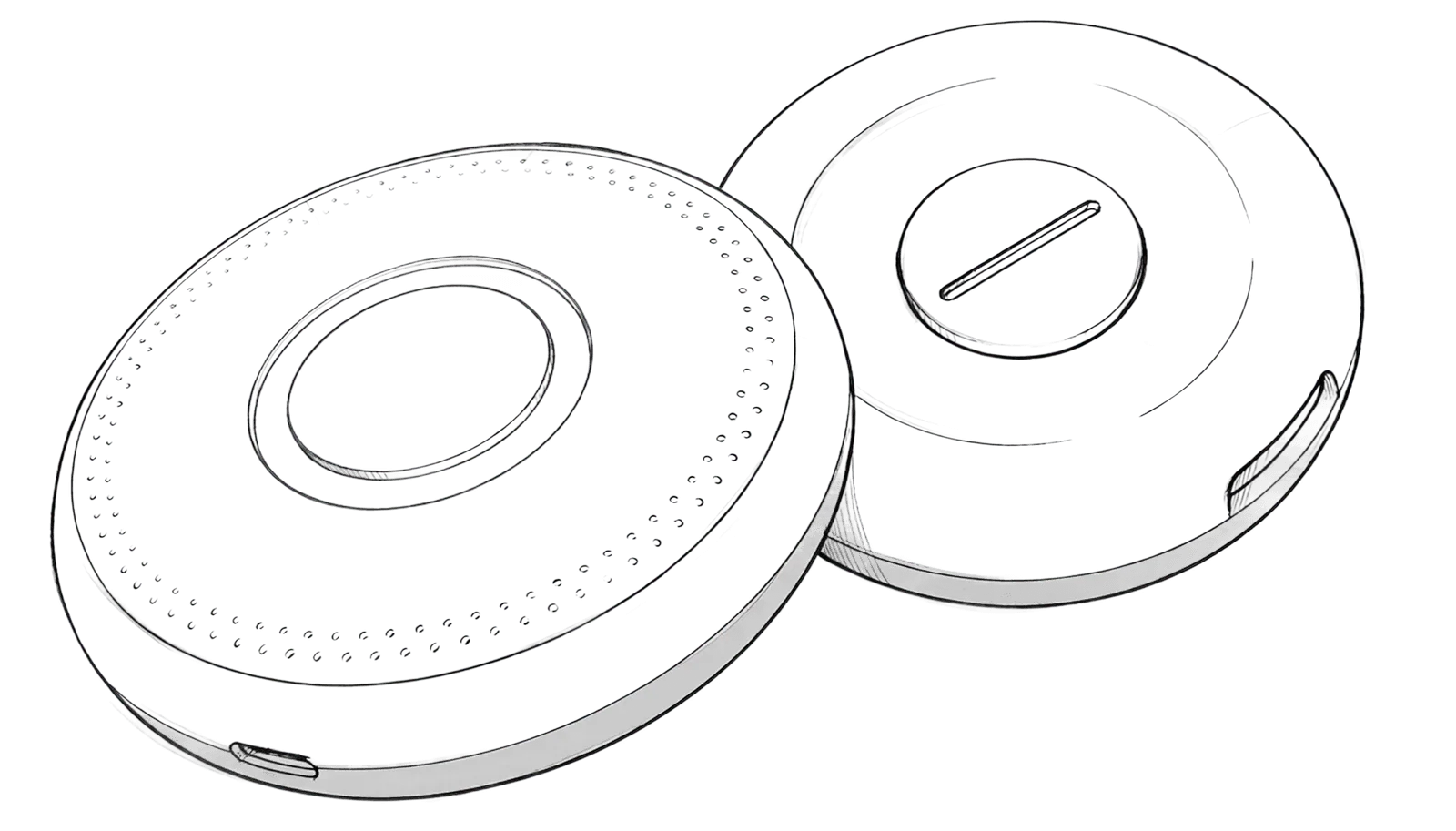
Small, non-intrusive nodes placed around the home. Veo learns passively and adapts to who’s speaking and the time of day. Wake it with a tap or “Hey, Veo.”
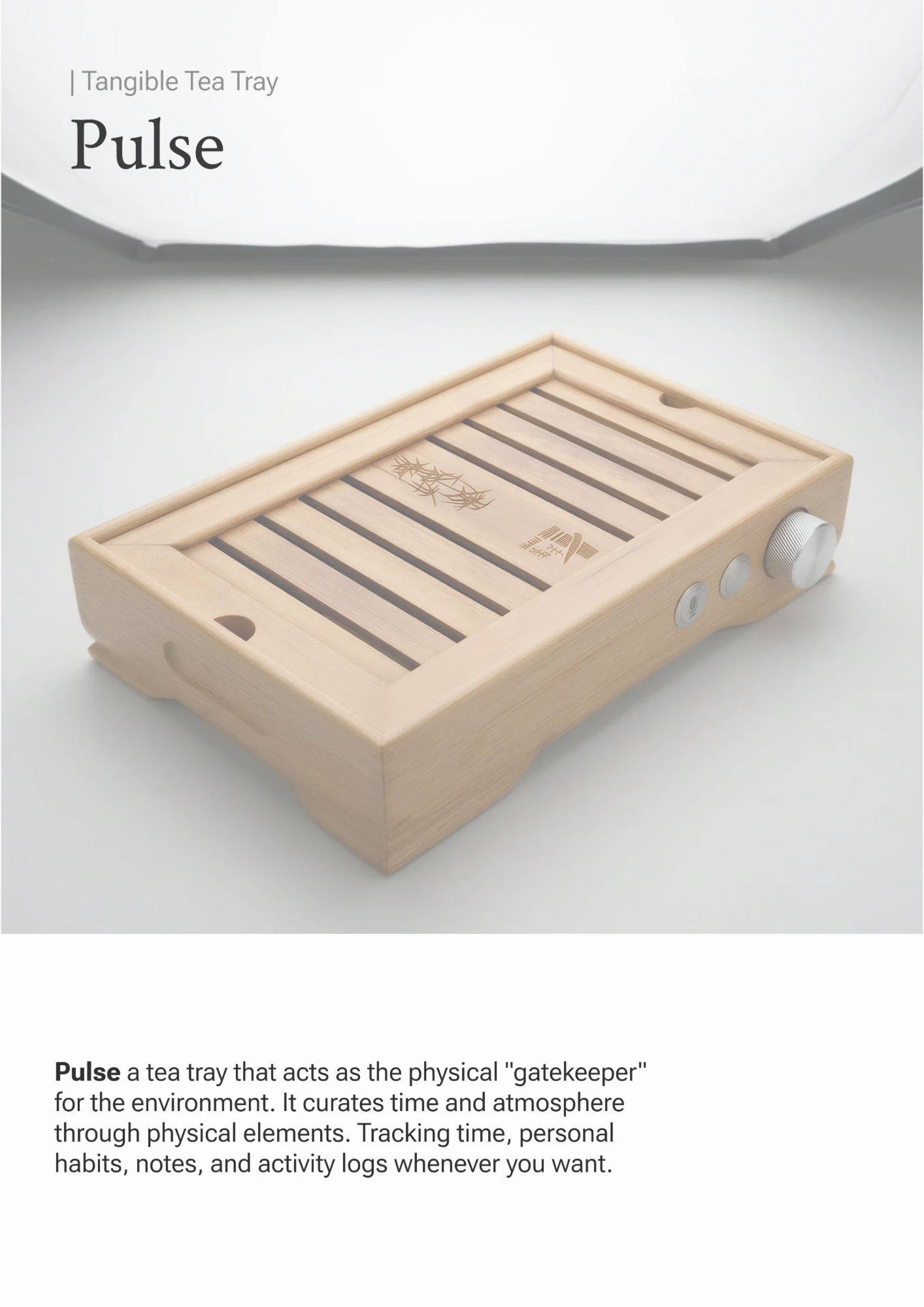
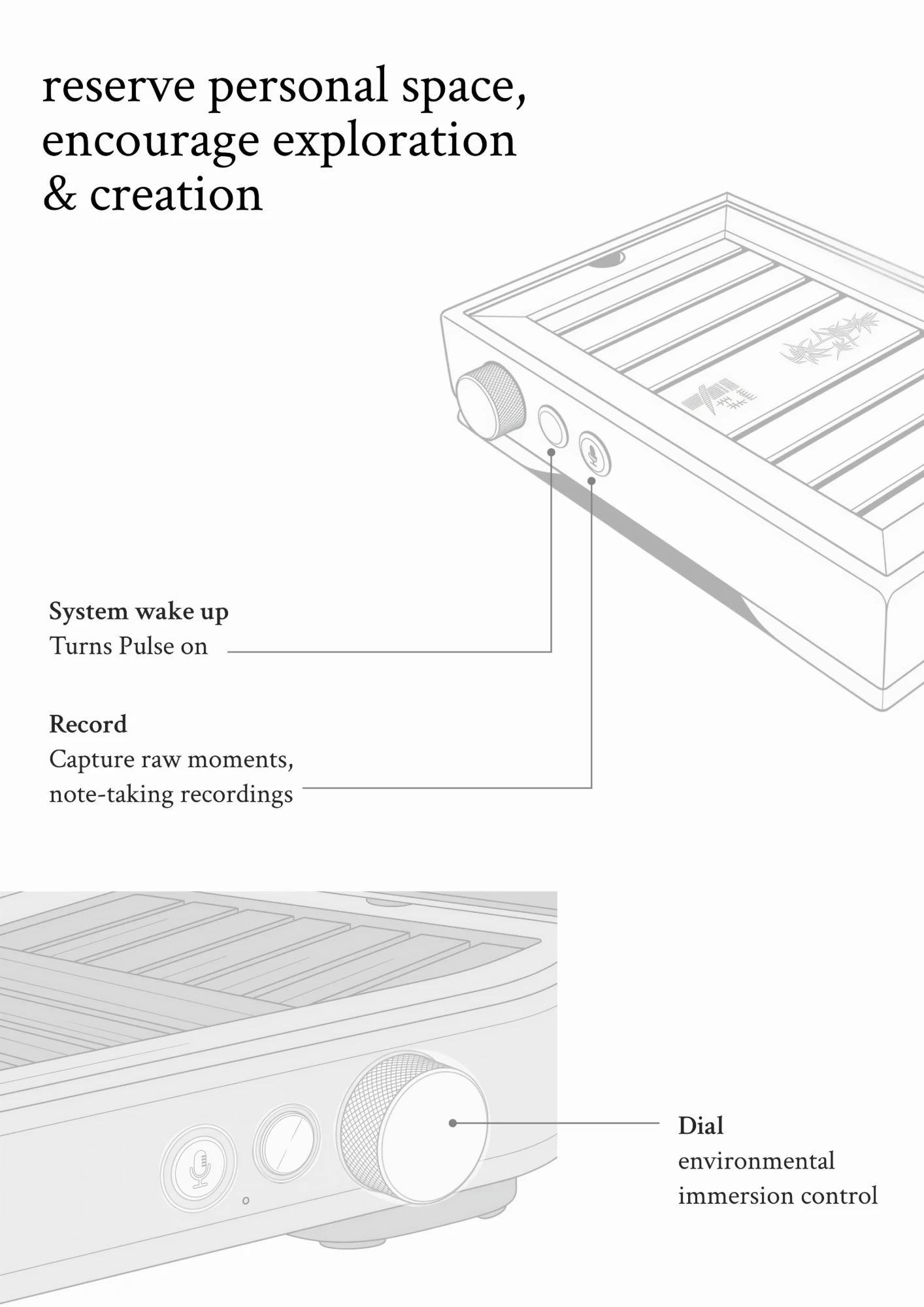
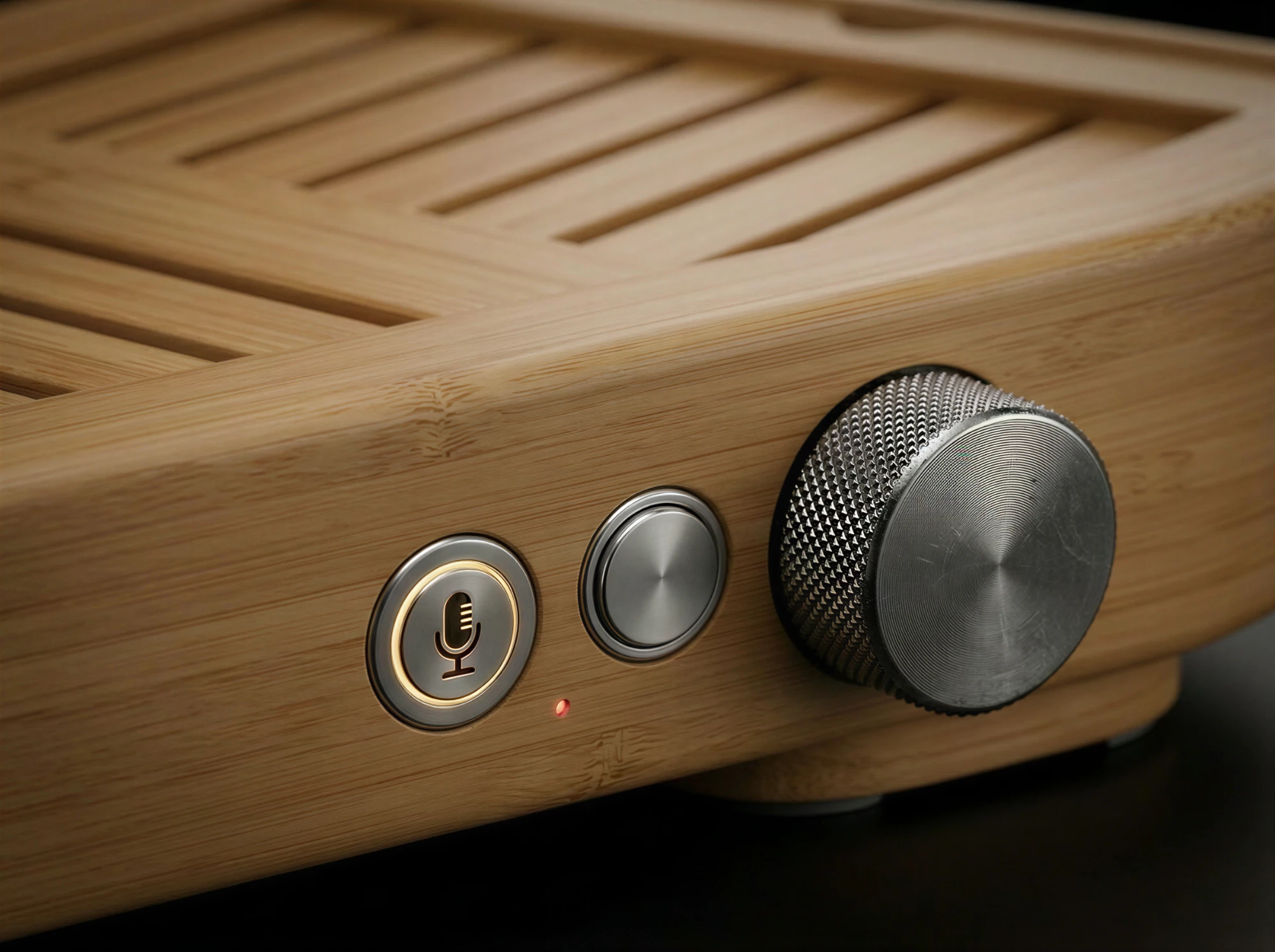
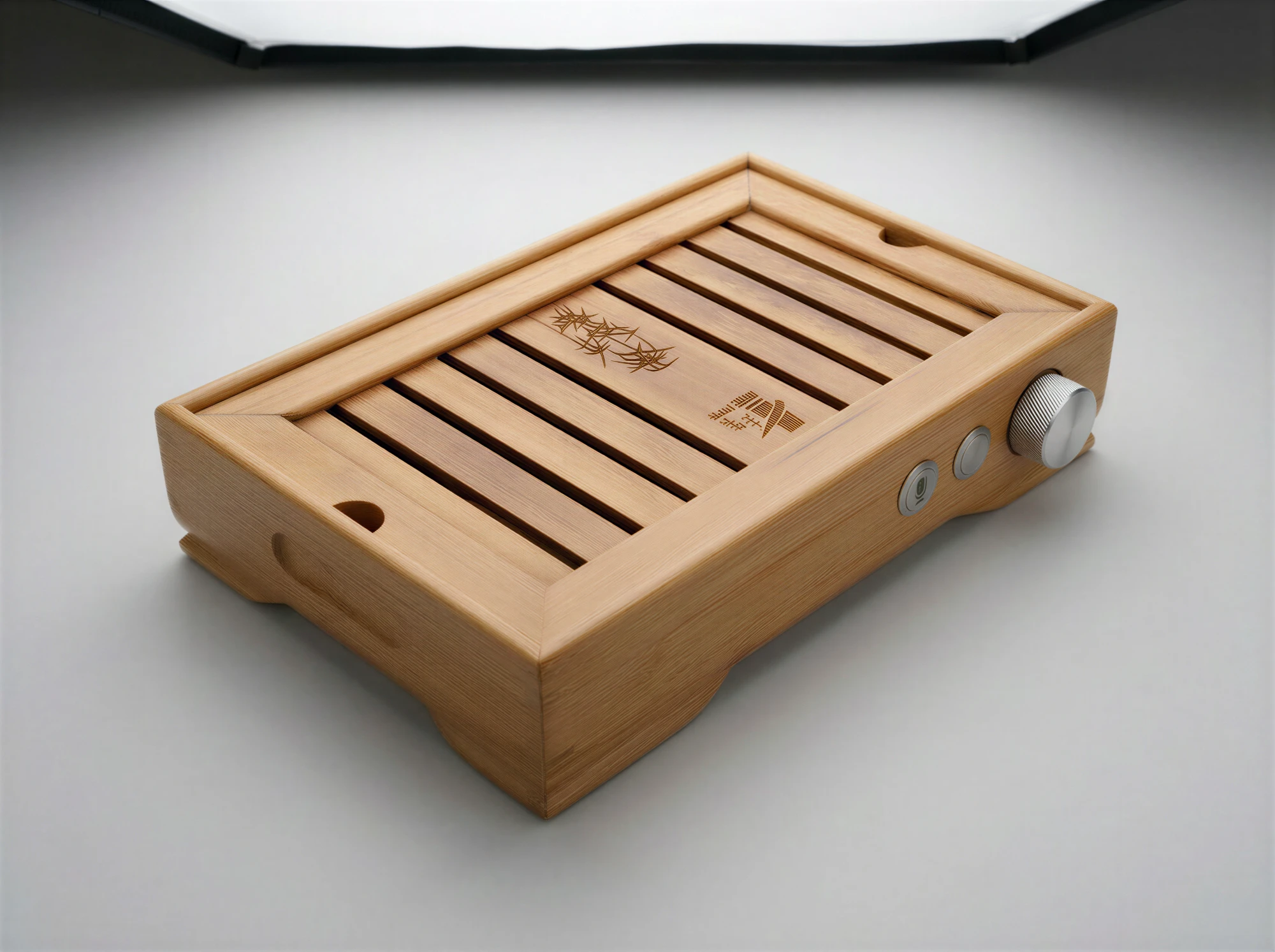
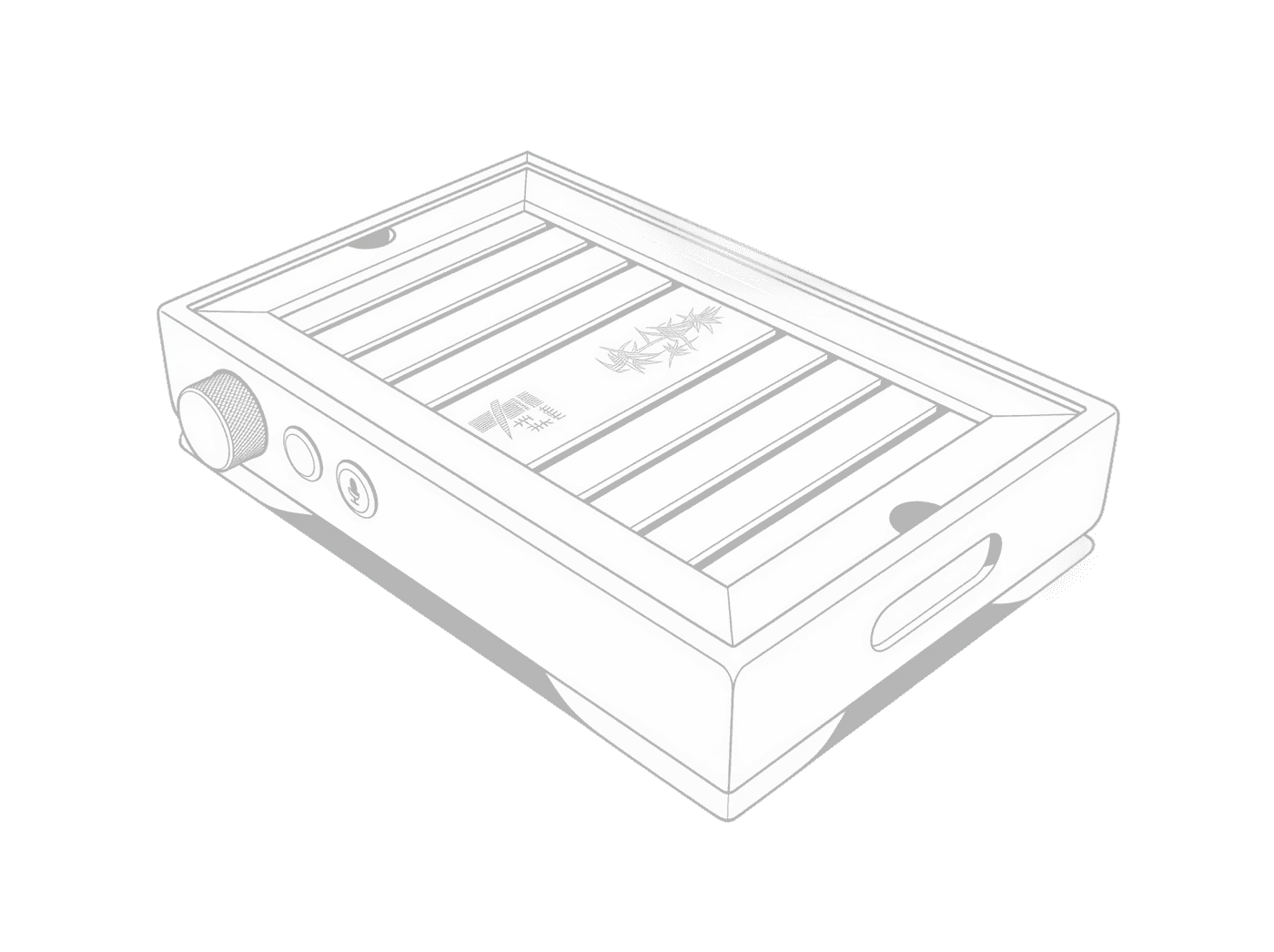
A tea tray that acts as the home’s physical gatekeeper. Wake the system, record a raw moment, or twist the dial for lighting, sound and mood.
Where it lives
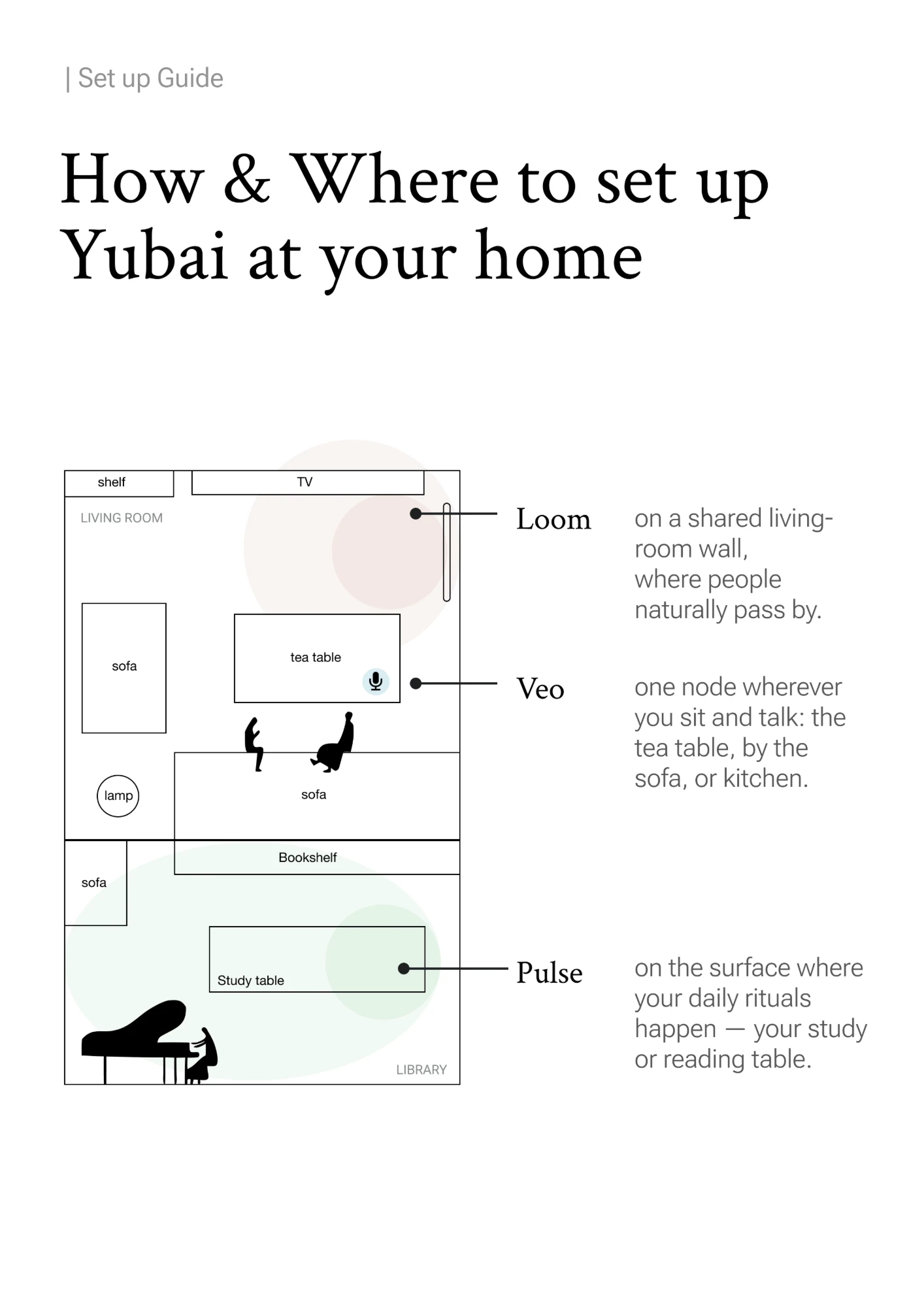
A setup guide shows families where each piece belongs, from the shared living room to a quiet library corner.
- Loom
On a shared living-room wall
Where people naturally pass by.
- Veo
Wherever you sit and talk
The tea table, by the sofa, or the kitchen.
- Pulse
Where daily rituals happen
Your study or reading table.
← Drag to explore →
06 Privacy
Private by default, shared by choice.
A home full of sensors only works if people trust it, so the setup guide answers three privacy questions up front.
Will Pulse share my private content?
No. Pulse is local-first: habits, notes and reflections stay on the device, never sync across the home automatically, and only appear on Loom with your permission.
Will Loom display everything?
No. Voice-recognition consent during setup lets Loom recognize who’s approaching and show only what that person is authorized to see.
Is Veo always listening?
Veo waits, patient and silent. It can’t cross your boundary until you intentionally wake it with a tap or your voice, shifting the home from “always monitored” to protected.
07 Reflection
Aging is a journey of continuous growth.
Reflection · 01
Rituals, not pastimes.
Literature, writing and calligraphy are lifelong practices of self-cultivation, and design should protect them.
Reflection · 02
Autonomy against the digital.
Craving closeness doesn’t mean wanting more notifications. Boundaries have to be built in.
Reflection · 03
Connection needs curation.
Users want to stay visible in family life by sharing milestones and thoughts, not to be flooded by it.
Reflection · 04
Respect their agency.
We balanced giving control with giving guidance, letting users explore the system instead of fixing the power dynamic for them.